

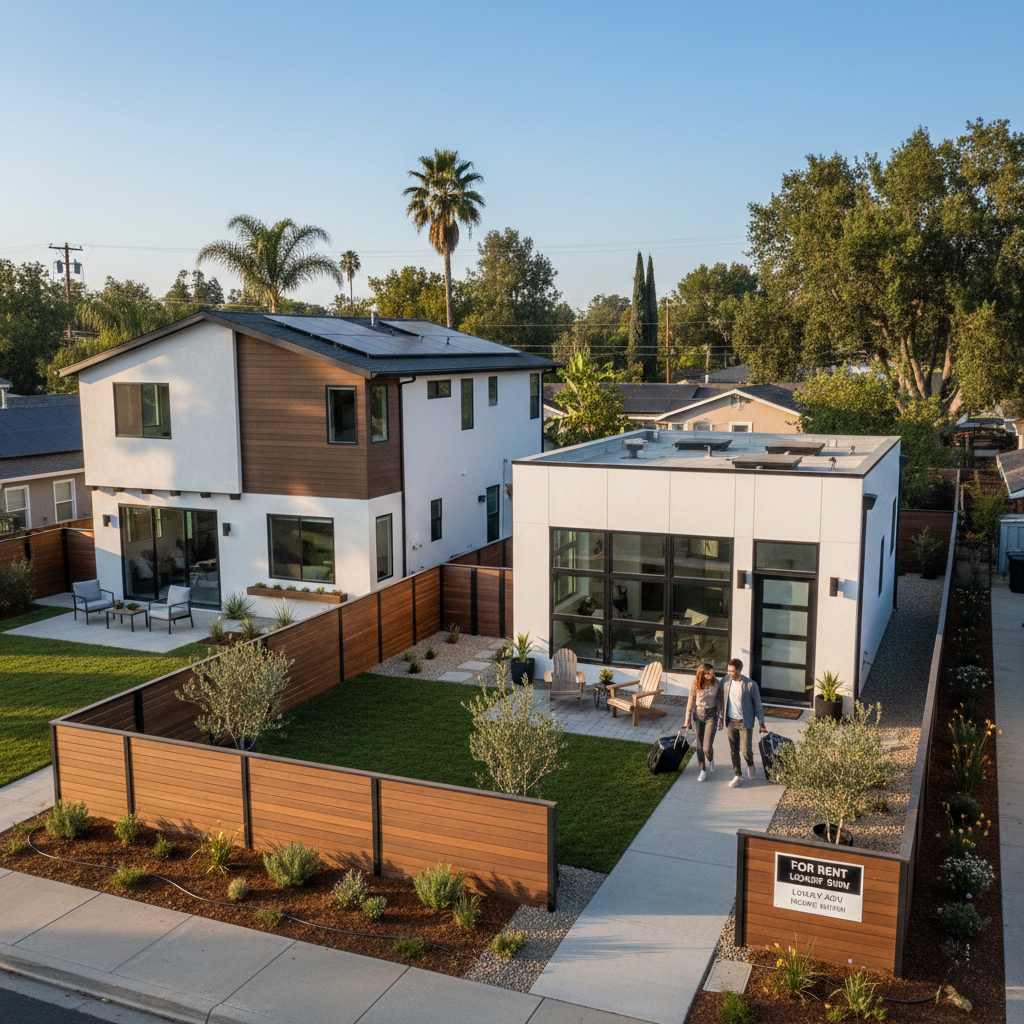
The Three Letters That Could Add $3K/Month to Your Income: ADU
What’s Behind the ADU Boom?
There are only three letters, but they can completely change how your property works for you: ADU, or Accessory Dwelling Unit.
These small, self-contained living spaces are becoming one of California’s most effective ways to build wealth. Whether it’s a garage-turned-apartment, a small backyard home, or an addition to your existing property, an ADU can generate $2,500–$3,500 per month in steady rental income, without you having to buy another property.
In places like La Verne and San Dimas, where housing demand remains high and space is precious, ADUs aren’t just smart, they’re transforming ordinary backyards into income-producing opportunities.
ADUs: More Than a Trend
California’s housing laws have changed the game for homeowners. A few years ago, building a second unit meant piles of paperwork and endless approvals. Now, the state has streamlined the process, making it faster, simpler, and far more profitable.
For property owners in La Verne and San Dimas, this shift has opened the door to a powerful wealth strategy that’s legal, flexible, and future-proof.
ADUs are more than a place for renters; they can serve as:
A rental unit generating consistent monthly income
A guest house or in-law suite for the family
A home office or studio that saves you money long-term
Whatever your goal, the beauty of an ADU lies in its versatility. It grows with your lifestyle and your finances.
Understanding What You Can Build
Not all ADUs are the same, and understanding your options helps you plan smarter.
A detached ADU stands alone, like a small home in your backyard. It offers privacy and strong rental appeal.
An attached ADU connects to your main home, often as a side or rear addition.
A garage conversion transforms existing space into a comfortable unit without expanding your footprint.
A Junior ADU (JADU) uses part of your existing home, ideal for downsizing or short-term rental use.
Each version includes essential living features, a kitchen, bathroom, and sleeping area, giving you a fully functional home within your property line.
Zoning Made Simple: La Verne and San Dimas
Both La Verne and San Dimas are among the most ADU-friendly cities in Los Angeles County. Here’s what you should know before breaking ground.
La Verne ADU Highlights
If your property is zoned for residential use, you’re likely eligible to build an ADU. Most lots allow up to 1,200 square feet, and you only need 4 feet of setback from the sides or back. Parking isn’t required if you’re within half a mile of public transit, a big plus for central neighborhoods. And the best part? Until 2025, there’s no owner-occupancy requirement for standard ADUs, meaning you can rent out both homes if you choose.
San Dimas ADU Highlights
San Dimas follows similar state-guided rules. Detached units can reach up to 1,000–1,200 square feet, with side and rear setbacks as little as 4 feet. Height limits usually cap around 16–18 feet, keeping neighborhood aesthetics intact. Permits are processed quickly, typically within 60 days, compared to months in the past.
Both cities are simplifying the path to approval, encouraging homeowners to add more housing while boosting their financial potential.
How Much Does It Cost to Build an ADU?
ADU construction costs vary based on size, materials, and layout, but they’re typically more affordable than people think.
In Southern California, most homeowners spend between $120,000 and $300,000. A garage conversion sits at the lower end, while a detached ADU with premium finishes can reach the higher range.
Now, think about the return: an ADU renting for $2,800 per month generates over $33,000 annually. Within 4–6 years, many homeowners recover their investment and continue earning passive income for decades. That’s the kind of math that builds long-term financial stability.
Smart Financing: How to Make It Happen
Worried about the upfront cost? You’re not alone, and that’s why financing options have expanded.
Many La Verne and San Dimas homeowners use home equity lines of credit (HELOCs) or cash-out refinancing to fund ADU projects. These leverage your existing home’s equity instead of dipping into savings.
Others explore ADU-specific construction loans, designed to cover design, permits, and building costs. Some cities even offer local incentives or low-interest programs to encourage development.
Popular ADU Financing Options
HELOC or Home Equity Loan: Ideal if you have strong home equity and want flexible repayment options.
ADU Construction Loan: Covers design, permitting, and building, often with competitive rates.
Cash-Out Refinance: Replaces your current mortgage while freeing up funds for your project.
Each method has pros and cons, but a lender familiar with ADU projects can guide you toward the best fit for your financial goals.
Design Choices That Drive Higher Rents
A thoughtfully designed ADU can command top-dollar rent and attract reliable tenants faster.
When planning, think about what renters value most in San Dimas and La Verne: comfort, privacy, and light.
Choose open layouts that make smaller spaces feel bigger. Prioritize natural light with larger windows or skylights. Add a separate entrance and outdoor patio space; those small touches increase both appeal and rent potential.
Design Tips That Add Real Value
Focus on livability: Use open-concept spaces and multifunctional furniture to make the unit feel spacious.
Add curb appeal: Thoughtful landscaping and a welcoming exterior boost first impressions and rental rates.
Go green: Energy-efficient insulation, solar panels, or LED lighting lower utility bills and attract eco-conscious tenants.
Even small design decisions can make a big impact, turning your ADU from “just another rental” into a high-demand property that practically markets itself.
Timeline: What to Expect
From concept to completion, most ADU projects take 6 to 12 months, depending on size and complexity. The process generally follows four main steps:
Feasibility Check: Verify zoning, setbacks, and available space.
Design and Permitting: Create plans that meet city standards and submit for approval.
Construction: Build the ADU, often faster than a full remodel.
Rent or Use: Lease it out or use it for family. Your income starts here.
Once it’s built, the difference is immediate: a steady rental stream, a higher home value, and a more flexible property.
The Long-Term Payoff
Beyond the monthly rent, an ADU can increase your home’s market value by 20% or more. That’s real equity growth, whether you plan to sell, refinance, or simply enjoy greater financial security.
And if you ever decide to downsize, you can live in the ADU and rent out your main home, flipping the script while keeping your investment working for you.
Sitting on Space That’s Earning You $0? Let’s Fix That.
You don’t need to buy a new property to grow your income; your own backyard might be the answer.
Imagine turning unused space into an income stream that pays your mortgage, builds savings, and gives you real financial breathing room.
It’s not a far-off dream, it’s a plan that starts with three letters: A.D.U.
Let’s explore what your property could really earn. Reach out today and see how simple it can be to turn your space into $3K/month in passive income.
